

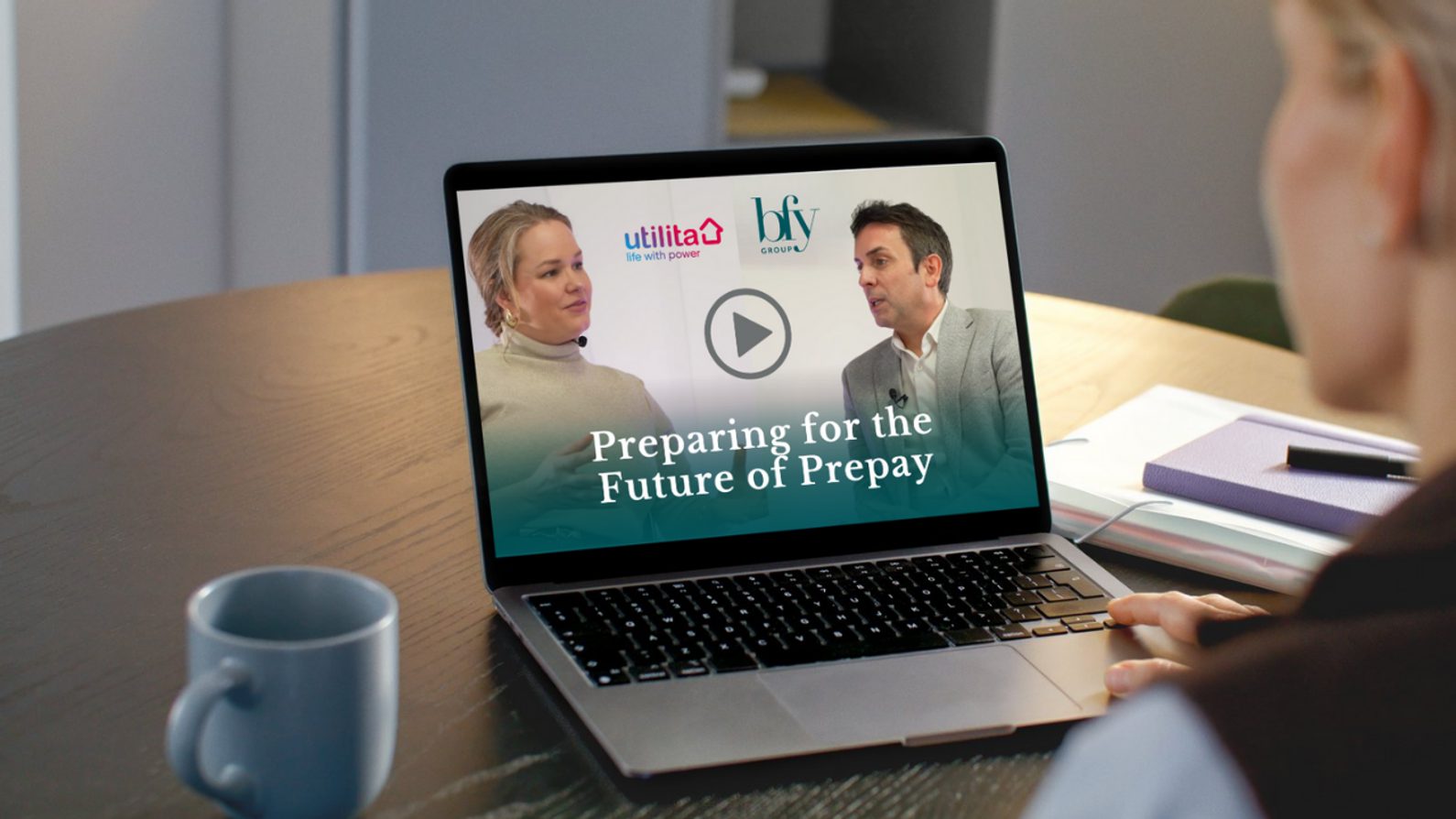
For the first of our Expert Interview series with utility leaders, we sat down with Louise Walsh, Chief Customer Contact Officer at Utilita.
The full interview is available to watch, but we’ve also summed up some key points below.
For this second summary article, we’re focusing on misconceptions, how technology is reshaping things, and Louise’s vision for what the future of prepay could (and should) look like.
Prepayment is almost unrecognisable from 15 years ago
Misconceptions and stigma remain around prepayment, but Louise doesn’t hesitate to explain why. “Historically prepayment had a real stigma against it in terms of who it was for and the ways in which you could top up. If you look back to the 70s and 80s, one in five prepay installations were for debt. It wasn't really something you chose. You either moved into a property that had prepayment, or you were placed onto a prepaid meter through debt.”
“That certainly changed with the advent of smart meters so there’s no need now for it to have that stigma. For many customers, it’s the payment method of choice. Customers no longer need a meter swap to switch payment methods, and the economics have shifted too. Ofgem went a huge way to correct that by reflecting it in the price cap, making it the cheapest way to pay, to reflect those cost pressures that are on suppliers.”
“Consumers are actively choosing prepayment now because it's cheaper. It gives them more control, and suppliers aren't holding on to huge amounts of their money, which is a big criticism of the industry.”
But Louise is candid that more work remains to educate and change opinions about prepayment being a flexible and viable option.
“There's a lot more we can do.”
Much of the misunderstanding for the public and energy industry leaders Louise puts down to poor or limited first-hand experiences, most likely from those dark times she mentioned before.
“I wish public perception would change more. There still is absolutely a stigma. It is slowly changing, and it's everyone’s job to help continue to do that.”
Something they’re addressing at the very top of Utilita. “The executive team at Utilita all have prepay meters. And that’s a conscious choice.” By experiencing the service they’re selling, they understand how good it is or what needs to change. And it’s driving improvements.
The myth of the disengaged prepayment customer
One of the most persistent assumptions in the sector is that prepayment customers are unengaged and hard to reach.
“Prepaid customers have always been hugely engaged. You're keeping an eye on your balance, you’re more conscious of what you're using.” And improvements in technology are increasing that engagement further. App-based top-ups, auto top-ups, and real-time balance monitoring have made managing energy more accessible and reduced the anxiety that was once associated with running low on credit. Consumers no longer have to dash to the local shop when they run out of credit. And thanks to careful communication and media campaigns, customers are becoming more aware of their rights and the support available to them too.
Utilita’s data dispels the myth further: “Our customers are very tech-savvy and really digitally engaged too. 600,000 of our customers use the app on a daily basis!”
Engagement levels like that provide significant opportunities for suppliers to provide support without calls, reducing administrative burden and identifying where customers might need extra support.
Stop assuming, start listening
The preconceptions around prepayment have been damaging to industry leadership and Louise points to another way. She shared a startling example from the Covid energy crisis where emergency credits were added to electricity meters ahead of winter.
“We had 18,000 calls in one week from consumers asking us to move the credit to their gas meters instead.” While the intentions were good, they were short-sighted and misplaced. However, Utilita's response was to build the functionality into the app within eight weeks, allowing customers to move credit between meters as they needed.
“If customers have built up credit on their gas over the summer months and need some on their electricity (or vice versa) customer can now do that themselves in the app.”
Louise highlights this as just one of Utilita's best product improvements, which haven't come from internal strategy sessions; they've come from customers.
“There is no better voice than the voice of the customer to assess what it is we should be doing. A lot of our improvements come from our customers saying what they need.” Something that’s now formalised through Utilita's customer community of around 40,000 members. They support one another, contribute to beta testing, and feed directly into focus groups. They’re shaping the future of prepayment.
The future of prepay
Louise is enthusiastically optimistic about the future and clearly sets out where the hard work and opportunities lie.
This engaged prepayment consumer group offers huge potential for net zero targets. Louise explained Utilita has been working with National Grid on flexibility studies.
“There's a huge amount we can do with innovation through apps. Prepayment customers want to see ways in which they can reduce or change their usage. We credit the customer's meter within 24 hours. They're seeing the immediate benefit of changing their energy consumption. And I think the technology will continue to improve.”
Crucially, Louise wants prepay to be at the heart of the net zero transition, not an afterthought. She sees a future with flexible tariff options that make sure prepay, and the less-able-to-pay market can benefit. Particularly in terms of net zero, heat pumps, solar and battery.
“What we want to do is make prepay the payment method of choice for consumers. They can see real benefit with no exception to technology.”
She rejected the idea of an endpoint to fix prepayment. “I'm not sure you could ever say something will be solved. It's about that constant evolution and innovation to make sure we're meeting the needs of customer, and not assuming that because we've fixed issues in the past, we've fixed it for the future.”
Data sharing
For all the progress on technology and engagement, Louise highlights one area where the energy industry is poor: joined-up data. Despite all the talk about big data, no-one is sharing data.
“We need data sharing across water, councils, the NHS. All of this data exists and we need to make sure this is being shared. [For example,] maybe there's a medical need we're not aware of where a customer needs a warm home.”
“We have (the ability to share) obviously with the priority services register, across DNOs and energy suppliers, but it's morphed out of all recognition from what it was originally.”
Louise also stressed the human impact, as customers often get upset or frustrated going through emotional updates. The principle she comes back to is simple: “A customer should only have to tell their story once. They talk to someone they trust, and that information gets to all the people who need it to provide support.”
She points out that the infrastructure already exists to make it happen, like DCC for smart metering had data from a centralised point. “We need to expand that across vulnerabilities and customer situations, so that we can get help to those who need it most. This, of course, must be built on consent. Customers should be able to opt in or out.”
The goal is to create a model that doesn't just address energy debt or vulnerability. “If a customer is in debt with their energy, that won't be the only debt potentially they have. And it's about how we can have that more holistic view. Working with the likes of Citizens Advice, the Extra Help unit, with charities, to provide a much more holistic support. Support that says we're not just getting you out of your poverty now, we're going to keep you out of it.”
Louise believes sharing data also has the potential to change behaviours and energy supplier relationships. The shared data and support “is about how we can get people out of poverty but also how we can reduce consumption in a way that is safe and make energy affordable for everyone. Whether vulnerable, prepay, or direct debit, it shouldn't matter. This should be about an energy transition. That means the energy is available and affordable to everyone in a way that suits their needs.”
Louise’s message to industry leaders
When Kevin asked for her parting message about prepayment to senior leaders in the energy industry, Louise kept it straightforward.
“It's wider than prepayment. We need to work together particularly with data sharing. It is all our roles to ensure we are listening to customers, that we understand their needs, and we are meeting them where they need to be met.”
So, the challenge to the industry is clear: stop relying on assumptions, start listening to people, and design support around real lives.
Read part one of our conversation with Louise, where we explored the proposed Debt Relief Scheme, its potential impact on prepayment customers, and what good support looks like for this diverse segment.
View the full interview with Louise.
For more on engaging prepayment customers effectively, contact Kevin Scott.
Rachel Littlewood
Partner
Rachel leads our operational and financial turnaround engagements, helping to solve complex operational challenges while maximising commercial performance and customer outcomes.
View Profile