

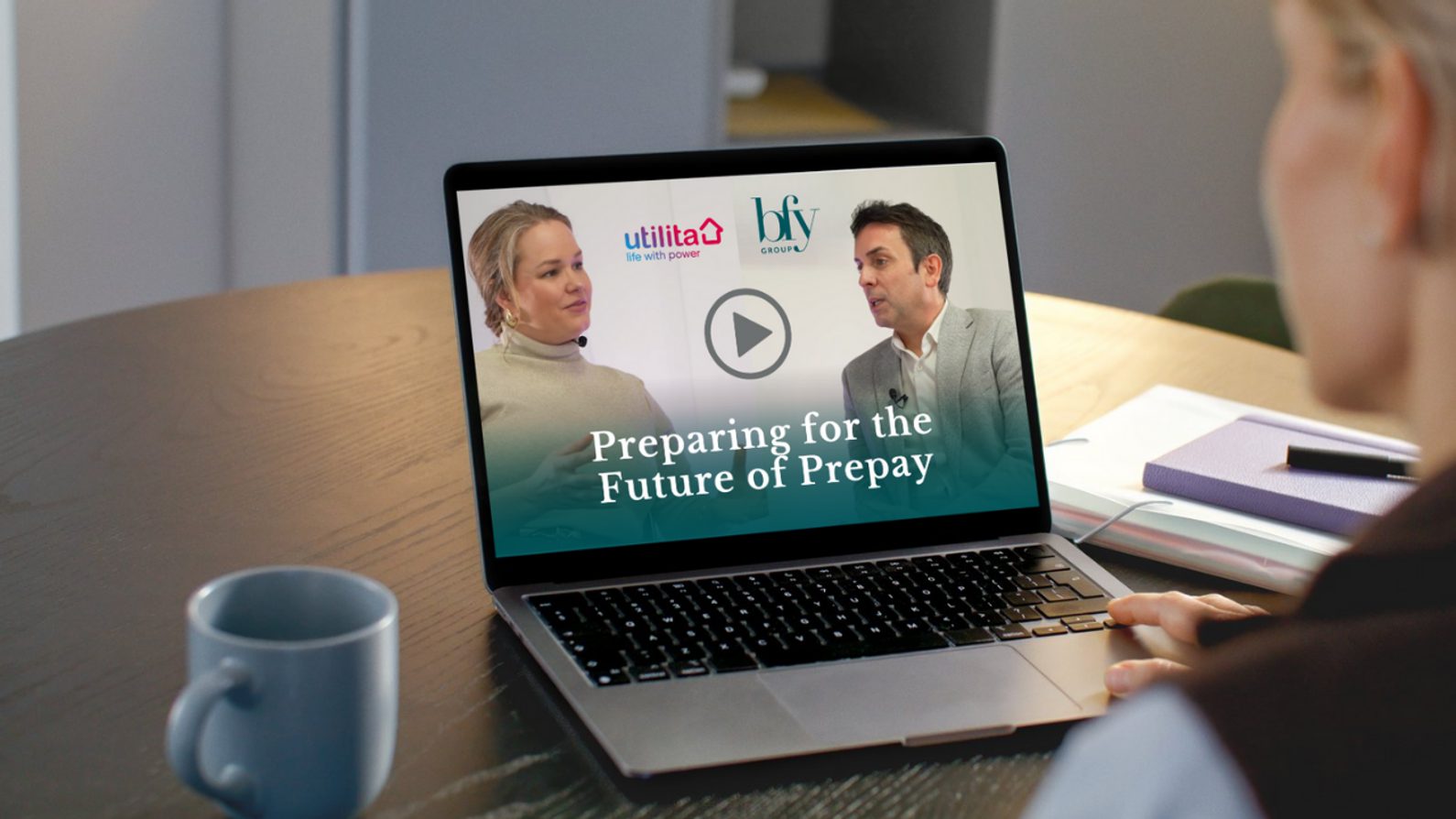
In the first of our podcast discussions with energy industry experts, we sat down with Louise Walsh, Chief Customer Contact Officer at Utilita.
We addressed the proposed Debt Relief Scheme (DRS), its potential impact on the prepayment market, whether it goes far enough, and Louise shared her ideas about what good customer support looks like for this diverse customer segment.
At its core, DRS will help some customers (195,000 according to Ofgem information) who built up debt during the energy crisis period (2021/2022). Customers on repayment arrangements will see some of the debt built up during the period written off. The scheme will prioritise customers receiving means-tested benefits and those who maintained repayments. The proposal mentions a sum of £500m across the industry.
Louise’s view of DRS for prepayment customers
“The Debt Relief Scheme itself is hugely important to help prepayment customers. I fully welcome support and it will give customers a clean starting point. But I would question if it goes far enough?”
“If we look solely at the additional support credits we provided during that time, which is the way in which most prepayment customers will build up debt, we were providing £60m a year and we only supply 18% of the PrePay market. Once you roll this out, to credit and prepay customers, I'd question if £500m is the right amount of money. And there's still a huge mental cost to consumers for being in debt.”
Clarifying eligibility
“DRS will be means benefit tested initially, but eligibility could potentially be clearer. There may be confusion from consumers that we're talking about 3 or 4 years ago while many are still struggling now. We are still very much in an affordability crisis, so as much as they will understand the concept of their debt being written off, that's not helping them with their ongoing energy consumption.”
“There needs to be a balance from Ofgem in terms of what support we're giving who. We see enough confusion at the moment with the Warm Home Discount. This is a very similar kind of eligibility to what DRS is proposing. Customers had to have been making repayments and the scheme will be means benefit tested initially.”
“There will be customers who have struggled to keep on top of their repayments that will see no benefit, and these may need the financial support more desperately than customers who maintained their repayments.”
Missing the squeezed middle
“There's a huge number of customers who may pay on receipt of bill who are paying an average of £200 more per year under the price cap than a prepayment or direct debit customer. And they tend to be the squeezed middle who get forgotten. Those customers who have seen huge price increases - in general, in their interest rates, in their mortgages, who have not historically struggled. They don't know where to go for help and therefore are being missed.”
“I think we need a huge piece of communication out to all consumers about the support available. Not saying, because you're prepay, or because you've been in debt or because you're on the PSR, you need more help than another. One of the major criticisms of the Energy Bill Support Scheme was that everybody got this money, when if they had tweaked it, tailored it, we could have gone so much further to help those customers.”
Improving support for prepayment customers
Exploring the potential that the DRS has for prepayment customers, we asked Louise what she would recommend to Ofgem, suppliers and customers. Are there other considerations or ways to help? What would good support look like to her?
Support needs to be much more tailored
“We saw a massive reduction in self-disconnections (about 4%) for the period when consumers were given this additional £400. But we can’t group all customer together. We see a lot of prepay customers who keep their meters topped up with the additional support they get through things like the Warm Home Discount. But it doesn’t work for everyone.”
“There is a huge assumption that prepayment customers tend to be in the lower socio-economic groups, or that they are more vulnerable. We need to stop grouping all prepaid customers together.”
“We need to stop using the Priority Service Register (PSR) as a proxy for customers that need support and actually speak to consumers. Before my daughter turned five, I was on the PSR but didn't consider myself to be vulnerable.”
“At Utilita we have around 200,000 customers who are on the PSR, who do not consider themselves to be vulnerable. They consider prepayment to be an absolutely safe way to pay for energy, and it is a consumer choice. Vulnerability means different things to different people.”
“I think we are in danger of grouping customers and saying, because you are on prepayment, because you are on the PSR, we no longer feel this is safe for you and therefore this is the support we will give you.”
“We need to make sure we're protecting these consumers, but simply having groups as a checklist doesn't do enough.”
Louise also argues that vulnerability is contextual and sometimes temporary.
“Vulnerability is, in its very nature, transient. As I said earlier around having a child under five, the moment they turn six doesn't change the way in which you're interacting with energy. It’s the same with someone over 65. Obviously, with medical issues, it is slightly different. If, for example, you've been in hospital and you need to stay warm for a period of time afterwards, we as suppliers need to make sure consumers are talking to us about that.”
“For a long time, energy suppliers have been seen as the bad guys and therefore customers don't want to talk to us about their situation. They don't see us as someone who's going to help them. And we need to really change that narrative. I think the media has a huge part to play in that. We need consumers to talk to us. We want to understand their situation.”
“We need to ask consumers what help they need.”
Better communication
“We have a horrible habit in the energy industry of using acronyms and assuming that because this makes sense to us, it will make sense to everybody else. We need to look at this through the eyes of the consumer. At Utilita we have a customer-first approach, and a lot of our communication is tailored using customer focus groups. So, I think the communication that is put out into the media, particularly around DRS, needs to be crystal clear and needs to be sense checked with customers.”
A clearer way forward
The Debt Relief Scheme is widely viewed as a positive and necessary step in addressing debt built up during the energy crisis. As Louise reflects, however, its ultimate impact will depend on how effectively it is implemented in practice, particularly around eligibility, communication and the lived experiences of different customer groups.
Many of the issues raised in this discussion will be familiar across the sector, including the importance of clear communication, sensitivity to individual circumstances, and the limitations of relying too heavily on broad customer labels to determine need.
Louise’s perspective reinforces that while financial interventions such as DRS play an important role, their effectiveness is shaped by how well they’re understood by customers and how they sit alongside longer-term approaches to affordability, engagement and trust. Progress depends on listening to customers and adapting support in ways that reflect how people actually experience and use energy.
Look out for the second article which captures Louise’s views on the future and potential of the prepayment market. Or view the full interview with Louise.
Rachel Littlewood
Partner
Rachel leads our operational and financial turnaround engagements, helping to solve complex operational challenges while maximising commercial performance and customer outcomes.
View Profile